
How to Wear Perfume in the Monsoon Without It Turning Sour
Monsoon is the trickiest season for fragrance in India. Damp air, damp clothes, sweat that will not evaporate, and a perfume that seemed perfect in March suddenly reads sickly by 11am.
Why humidity ruins some perfumes
Two effects stack up. First, moist air carries scent molecules much further, so everything projects harder — a perfume you liked at two sprays becomes overpowering at the same dose. Second, sweat does not evaporate efficiently in high humidity, so it sits on the skin and mixes with the fragrance. Sweat plus certain fragrance materials is where the sour, slightly fermented note comes from.
The notes that go wrong
- Heavy gourmands — vanilla, caramel, chocolate, tonka-forward sweetness. In damp heat these turn cloying fast.
- Big white florals — tuberose, heavy jasmine. Beautiful in winter, suffocating in 90% humidity.
- Dense oud and resin bombs. Too much mass for wet air.
- Sweet fruity notes. Overripe is one small step away.
The notes that work
- Aquatic and marine — the obvious match, and they read clean rather than sweet.
- Citrus and bergamot for lift, though they fade first.
- Green and herbal — vetiver, basil, mint, tea.
- Dry woods — cedar, pine, dry sandalwood. Structure without sweetness.
- Clean musk as a base instead of vanilla.
Technique for damp weather
- Cut your sprays by one. Humidity is doing the amplifying for you.
- Shower and dry fully first. Perfume on already-damp skin dilutes and drifts.
- Avoid sweat zones. Skip the underarms and the small of the back; use the throat, inner elbows and behind the ears.
- Do not spray damp clothes. Wet fabric plus fragrance oil is exactly how stains and sour notes set. Wait until the garment is dry.
- Reapply lightly at midday rather than loading up in the morning. The free 8ml tester is ideal for a bag.
What to wear this monsoon
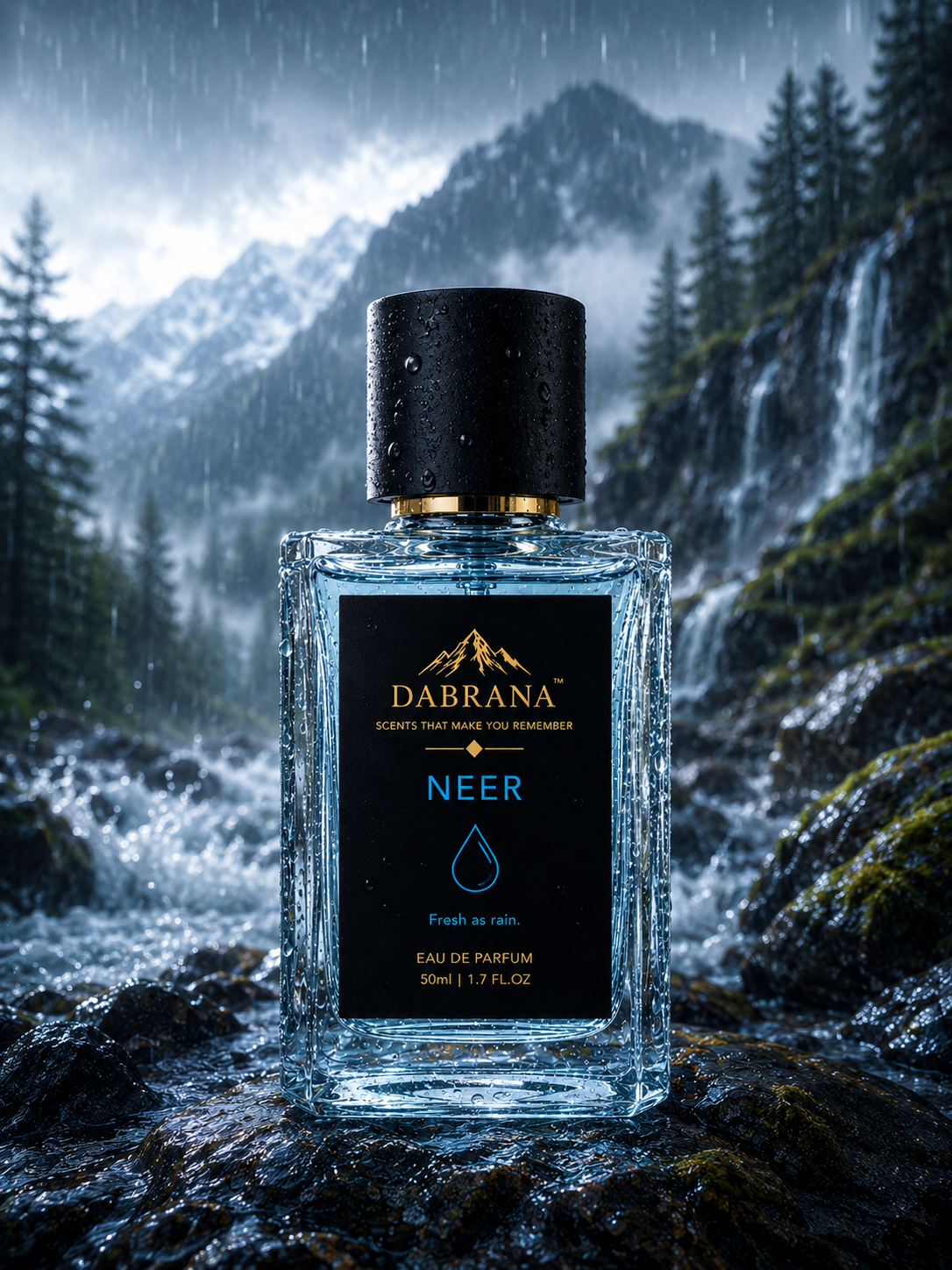
Neer is the natural monsoon choice — cool, aquatic and clean, with a cedarwood-patchouli base that reads dry rather than sweet, so it stays crisp when the air is heavy. Lehar is the other fresh option, breezy and light on the skin. For a soft floral that does not go heavy, Pushpika — though keep it to two sprays, since its brown-sugar base has more presence in humid air. Save Vanraj and Kusum for the cooler months: Vanraj has the most mass of the six, and Kusum is exactly the sort of big white floral this article warns about.
Be careful with Aaranya in monsoon
Its opening is dry — bergamot, Sichuan pepper, lavender, star anise — so it reads as a cool-weather scent. But its base is vanilla and ambroxan, and the rule at the top of this article applies to it too: warm-sweet bases amplify in humidity and are the ones most likely to turn on damp skin. It is a genuinely good October-to-February fragrance. July is not its season.
Each is 50ml Eau de Parfum at ₹1,111, 8+ hours of wear, free shipping and COD across India, with a free 8ml surprise tester included. Use the scent profiler to match your skin and city.
FAQ
Does humidity make perfume last longer or shorter? It projects more but often lasts less, because sweat interferes.
Can I wear the same perfume year-round? Yes, if it is a fresh or dry-woody profile. Gourmands really do not translate.
Why does my perfume smell sour by afternoon? Sweat mixing with sweet or heavy base notes. Switch profile, not dose.
Related: best perfumes for monsoon in India and best perfumes for humid weather. Background: monsoon.