
Natural vs Synthetic Perfume Ingredients: The Honest Truth (2026)
"All-natural" sounds appealing, but when it comes to fragrance the truth is more nuanced. The natural vs synthetic perfume ingredients debate matters for scent, safety and sustainability. Here is an honest, myth-busting guide for 2026.
What are natural fragrance ingredients?
Naturals are derived from plants and other natural sources — essential oils, absolutes and extracts such as jasmine, tuberose, sandalwood and bergamot. They are beautiful and complex, but can be costly, vary batch to batch, and some (real sandalwood, certain animalic materials) raise sustainability or ethical concerns.
What are synthetic fragrance ingredients?
Synthetics are made in the lab. They let perfumers build smells that cannot be extracted at all — marine notes, "fresh rain", clean musks, ambroxan — keep a formula consistent bottle to bottle, and take pressure off endangered natural sources. They are safety-assessed materials, and they are the reason a great deal of modern perfumery is both affordable and reliable.
Busting the "natural is always better" myth
- Natural does not mean safer — several natural materials are more likely to irritate skin than well-assessed synthetics.
- Synthetic does not mean lower quality — most luxury and niche scents rely heavily on synthetics.
- The best perfumes blend both — naturals for richness, synthetics for consistency and for effects nature cannot supply.
The balanced approach
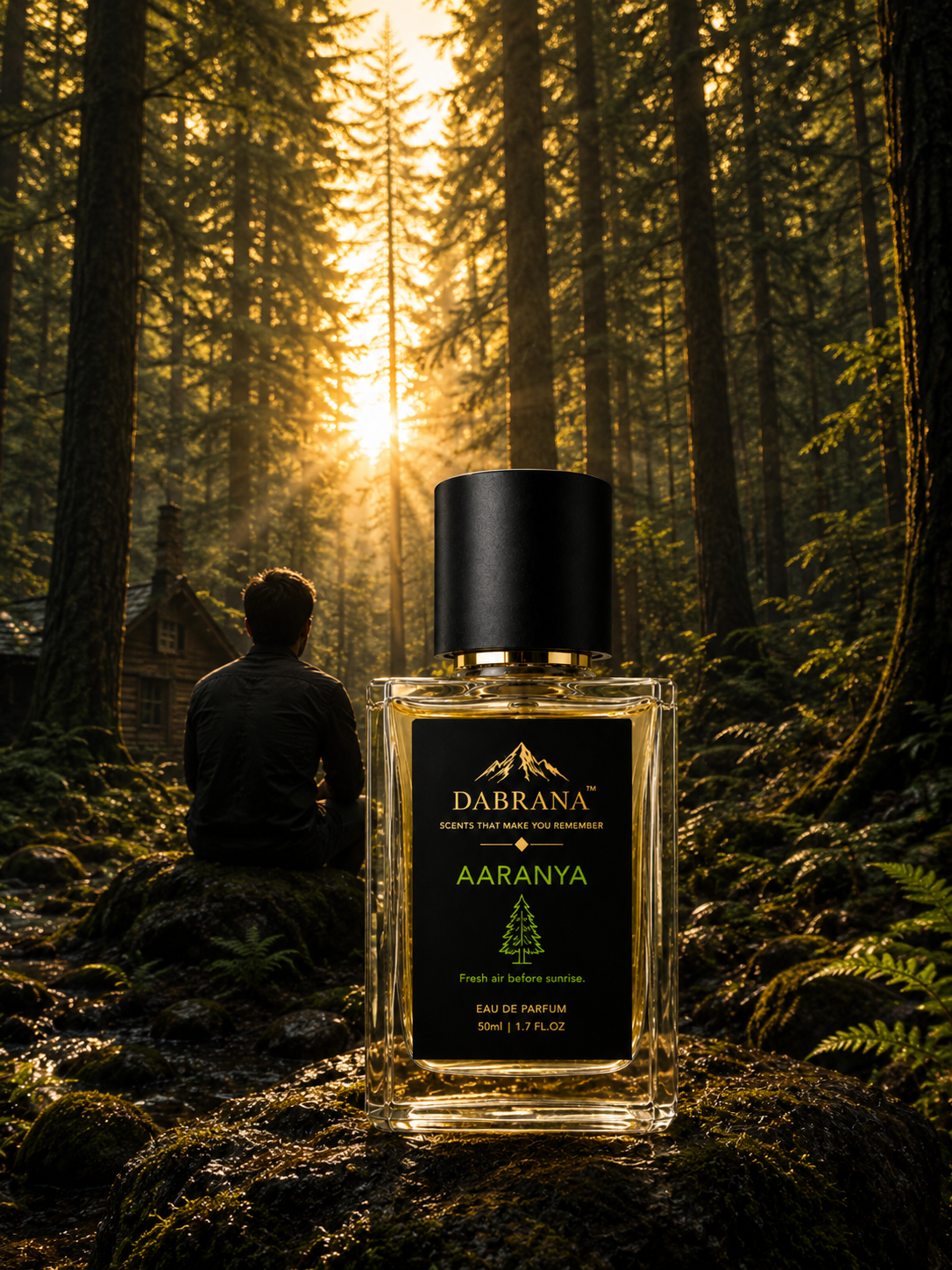
Every Dabrana fragrance is built this way: a 50ml Eau de Parfum at ₹1,111 against a printed MRP of ₹1,799, with 8+ hours of wear, blended to IFRA-conscious standards using both natural and synthetic materials. Aaranya is a clear example — Calabrian bergamot, Sichuan pepper, lavender and star anise over Papua New Guinea vanilla and ambroxan, where the vanilla is a natural and the ambroxan is not. Neer is another: real neroli and bergamot above marine notes that exist only as synthetics. Browse the full collection and learn how scents are built in our accords guide.
Frequently asked questions
Are natural perfumes better than synthetic ones?
Not necessarily — naturals are beautiful but can be inconsistent and sometimes irritating, while modern synthetics are consistent and safety-assessed. The best perfumes blend both.
Are synthetic perfume ingredients safe?
Used within IFRA guidance, yes — they are safety-assessed materials and are standard in luxury and niche perfumery alike.
Why do perfumers use synthetics?
To build smells that cannot be extracted naturally, keep a formula consistent, hold prices sane, and protect endangered natural sources.