
The Psychology of Scent: Why Certain Smells Make People Remember You
Have you ever smelled something that instantly moved you back in time? Rain on dry earth. A flower from a childhood garden. A relative's perfume. Unlike sight or sound, scent unlocks memory and emotion almost immediately — which is why fragrance is far more than a luxury purchase. It is one of the most powerful emotional triggers we have.
This guide explains why smell is bound so tightly to memory, why some fragrances become unforgettable, and how to choose one that shapes how people remember you.

Why smell is so strongly tied to memory
Of all the senses, smell has the closest connection to memory and emotion. When you smell a fragrance, that information travels to the parts of the brain handling memory, emotion and learning by a much shorter route than sight or sound. As a result, scents often trigger emotional recall faster than a photograph. The phenomenon is sometimes called the Proust effect, after the writer who described a single taste and smell reviving a whole childhood.
Why certain smells stay with us for years
Think about the people you remember most vividly. Their scent is often part of the memory. Years later, something similar can bring back places, conversations, emotions and entire relationships — because the brain stores smell alongside emotional experience. The stronger the emotion at the time, the stronger the association.
Fragrance and first impressions
People form impressions quickly, and before they remember what you said they remember how you made them feel. Fragrance feeds directly into that. A well-chosen scent can suggest confidence, warmth, sophistication or calm without a word being spoken, which is why so many people describe their perfume as an invisible part of their identity.
The emotional language of fragrance families
Fresh citrus
Bergamot, lemon, lime, mandarin. Widely read as energetic, clean and optimistic — approachable and easy to be around.
Aquatic and marine
Marine accords and oceanic notes. Associated with clarity, calm and open space; they tend to remind people of travel and weather.
Floral
Jasmine, gardenia, tuberose, frangipani. Read as romantic and elegant, and strongly tied to warmth and personal connection.
Woody and amber
Cedarwood, sandalwood, amber, patchouli. Read as grounded, stable and sophisticated — and because these materials are heavy and slow to evaporate, they are the ones most likely to be remembered.
Why signature scents work
Some people seem unforgettable, and consistency is a large part of why. When someone wears the same fragrance regularly, everyone around them begins forming an association. Over time the scent stops being a perfume and becomes a shorthand for the person. That is the real argument for finding a signature scent rather than rotating through novelty.
How memory shapes what you like
Few people are drawn to fragrances at random. Someone raised near the coast often loves aquatics; someone who spent childhood summers outdoors may gravitate to woods; someone who associates flowers with family celebrations tends toward florals. We rarely know why we love a scent — our memories usually decided it for us.
The Dabrana philosophy
Every Dabrana fragrance starts from a memory rather than a trend.
- Aaranya — a forest before sunrise: bergamot and Sichuan pepper warming into vanilla and ambroxan.
- Neer — cold water and rain on stone: bergamot and neroli over a dry cedarwood base, with no sweetness at all.
- Vanraj — ancient woods and warmth: spice over cedarwood, amber, sandalwood and musk. The heaviest base of the six, and the one that projects furthest.
- Lehar — waves and ocean wind: apple and lemon over ambergris and driftwood. The lightest in character.
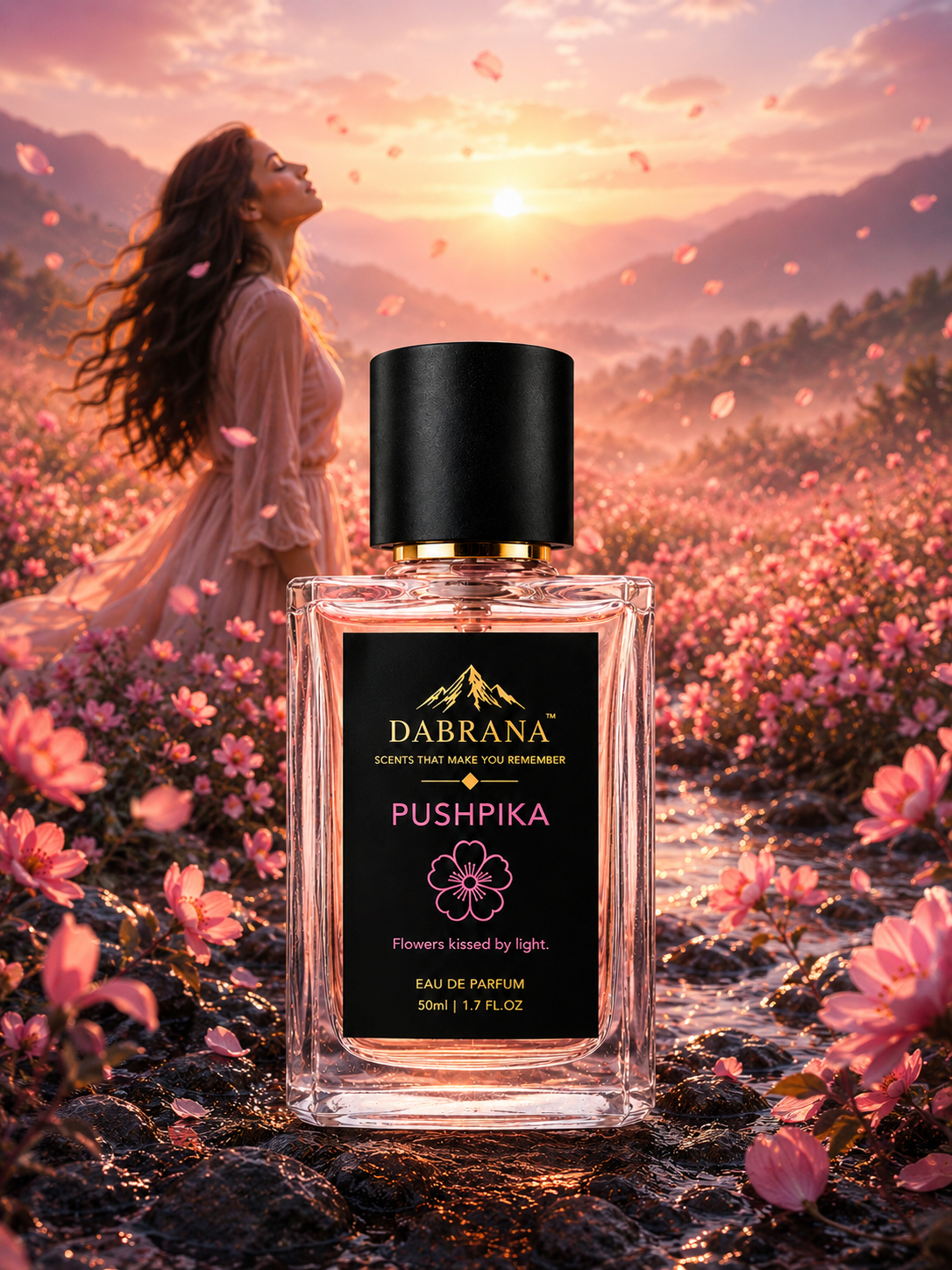
- Pushpika — flowers at dawn: gardenia and jasmine absolute over patchouli and brown sugar. The one with evening presence.
- Kusum — quiet mornings: jasmine and tuberose with almost no base beneath. The quietest of the six.
All six are 50ml Eau de Parfum at ₹1,111, built for 8+ hours of wear.
Choosing a fragrance people will remember
Instead of asking which perfume gets the most compliments, ask how you want people to feel when they think of you — adventurous, calm, sophisticated, romantic. That question points to a family far more reliably than a bestseller list does. Our guide to choosing a perfume by personality takes it from there.
One practical note: memorability comes largely from base notes, so if being remembered matters to you, choose something with a substantial base. Vanraj and Aaranya carry the most weight in the dry-down; Kusum, by design, sits closest to the skin.
Frequently Asked Questions
Why does smell trigger memory more strongly than sight or sound?
Smell signals reach the brain's memory and emotion centres by a much shorter pathway than visual or auditory information, so scent-triggered memories tend to arrive faster and feel more emotional.
What is the Proust effect?
It describes an involuntary, vivid memory set off by a smell or taste, named after Marcel Proust's account of a single mouthful reviving a detailed childhood scene.
Which perfumes are most memorable?
Those with heavy, slow-evaporating base notes — sandalwood, amber, musk, vanilla and ambroxan. They stay on skin and fabric longest, so they are what people associate with you.
Does wearing the same perfume every day make me more memorable?
Yes. Consistency builds the association. A scent worn regularly becomes linked to you in other people's memory in a way that frequent switching never achieves.
Further reading: the Proust effect (Wikipedia) and the brain's limbic system.