
Why Does the Same Perfume Smell Different on Different People?
Have you ever recommended a perfume to a friend, only to discover that it smells completely different on them? Or tested a fragrance in a store, loved it instantly, bought it, and later wondered why it did not smell the same on your skin?
You are not imagining it. The same perfume genuinely can smell different on different people. This is one of the most fascinating aspects of fragrance, and one of the reasons perfume feels so personal. Here is why it happens, how skin chemistry affects a scent, and how to find one that works on you.

Do perfumes really smell different on different people?
Yes. The same fragrance can read fresher on one person, sweeter on another, stronger on someone else and softer on a fourth. The perfume itself has not changed — the environment it is worn in has. Your skin becomes part of the fragrance.
Think of perfume as music. The bottle contains the same notes, but every person's skin gives a slightly different performance.
The science behind skin chemistry
Your skin has its own chemistry, and it affects how fragrance materials evaporate, blend and develop through the day. The factors that matter most are your natural skin oils, skin pH, body temperature, hydration levels, hormones, diet and climate. All of them influence how a perfume unfolds.
Skin type matters more than most people realise
Oily skin
People with oily skin usually get stronger projection, better longevity and richer development. The natural oils hold fragrance molecules for longer, so perfumes tend to smell deeper and stay put.
Dry skin
Dry skin tends to mean faster evaporation and softer projection, because the fragrance has less oil to bind to. If your skin is dry, applying an unscented moisturiser before perfume makes a real difference — we cover this in how to wear perfume if you have dry skin.
Why body temperature changes performance
Heat accelerates evaporation. Naturally warmer skin brings out stronger opening notes, faster development and more noticeable projection, while cooler skin reveals a fragrance more slowly and subtly. This is one reason the same perfume can feel more powerful on one person than another.
Climate plays a large role
India's weather is diverse enough that one fragrance can behave quite differently in Delhi's dry summer, Mumbai's humidity, a Bengaluru evening or a Himachal winter.
Hot weather
Fresh and citrus notes become brighter, and aquatic fragrances tend to shine.
Cold weather
Woody and amber notes become richer and smoother. This is why many people keep different perfumes for different seasons — see our two-perfume rotation guide.
Your diet can influence fragrance
Spicy food, garlic, alcohol and hydration levels all subtly affect body chemistry. The impact is not dramatic, but it can slightly change how a fragrance develops on your skin.
Why you should never judge a perfume in the first five minutes
The biggest mistake buyers make is judging a perfume immediately after spraying. For the first 15 minutes top notes dominate; from 15 minutes to about two hours the heart emerges; several hours in, the base is what you are wearing. A perfume may start bright and citrusy and end up warm and musky. Always wear it for several hours before deciding. Learn more in our guide to perfume notes.
Real examples from the Dabrana range
Aaranya
Aaranya opens with Calabrian bergamot, Sichuan pepper, lavender and star anise, and settles into vanilla and ambroxan. On warmer skin the vanilla base emerges faster and reads sweeter; on cooler skin the peppery, anise-led opening stays crisp for longer. Note that despite its forest-inspired name, Aaranya is a warm spice-and-vanilla fragrance rather than a woody one.
Neer
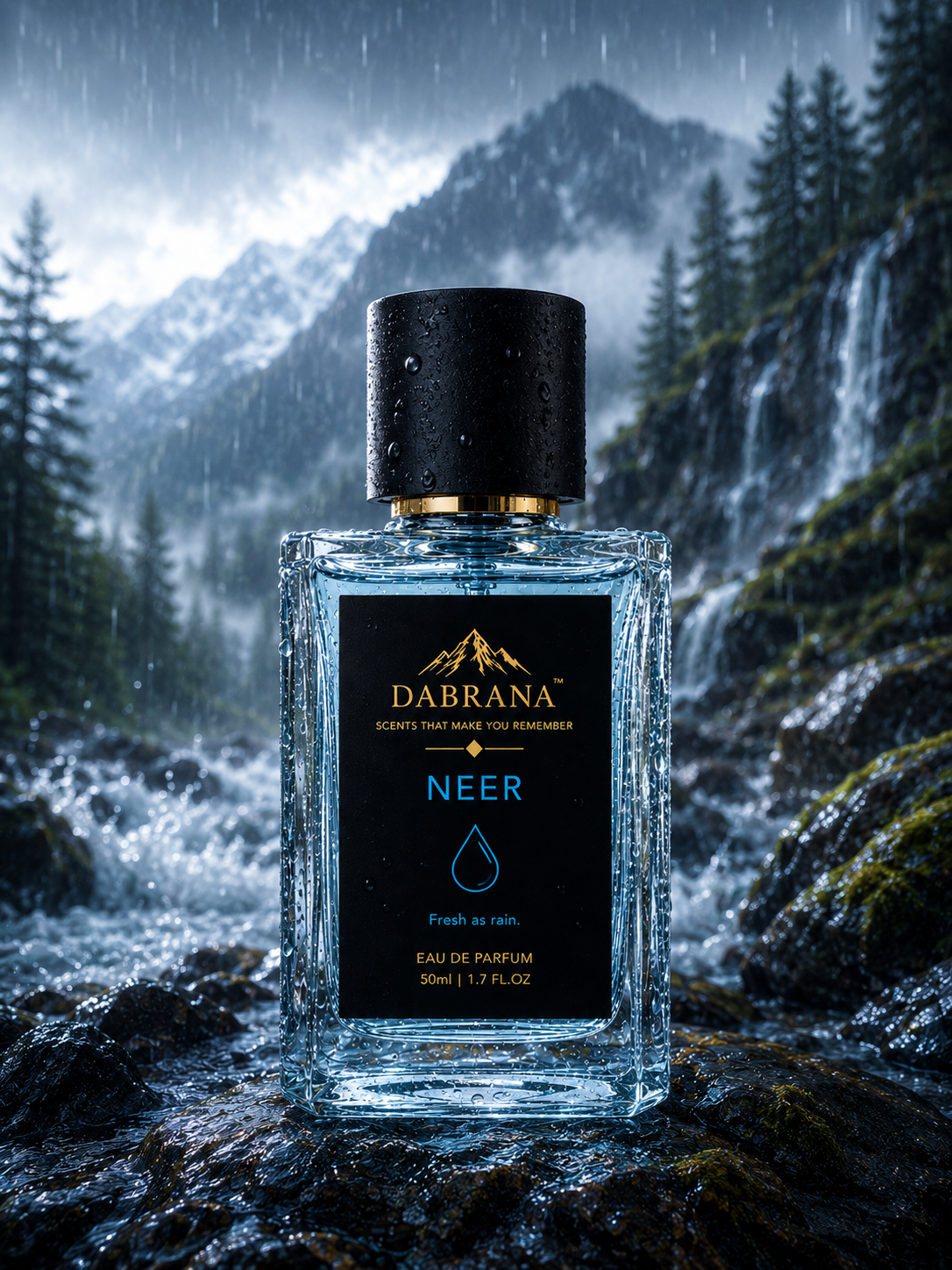
Neer is built around bergamot and green tangerine, a marine and jasmine heart, and a base of cedarwood and patchouli. Warmer skin brings forward the cedarwood-patchouli dry-down; cooler skin holds on to the citrus and marine freshness. The result is always refreshing, never identical.
Vanraj
Vanraj carries cedarwood, sandalwood, amber, patchouli and musk beneath black pepper, cardamom, cinnamon and clove. These rich materials become warmer and deeper on oily skin, while dry skin brings out the spice and the dry cedarwood character.
Lehar
Lehar combines apple, bergamot and lemon with watery notes, plum and orange blossom, over ambergris, driftwood, musk and patchouli. Some people experience it as bright and energetic; others notice a more sensual, ocean-inspired dry-down.
Pushpika
Pushpika's floral heart develops differently from person to person. White gardenia may dominate on one wearer while jasmine absolute or frangipani becomes the star on another — and on warm skin the brown sugar and patchouli base comes forward noticeably.
Kusum
Kusum is the most transparent of the six — jasmine, tuberose and rangoon creeper with very little base beneath them — so skin chemistry shows through it more plainly than in any other scent in the range. Some people notice more jasmine, others more tuberose.
All six are built for 8+ hours of wear; what changes between people is weight and presence rather than hours.
How to test a perfume properly
- Spray directly onto skin, not paper.
- Wait at least 30 minutes so the heart notes can develop.
- Wear it for several hours to experience the full arc.
- Test it in your normal environment — the office, outdoors, at home.
- Pay attention to how it makes you feel, not only how it smells.
Our three-day method goes further: how to test if a perfume suits you in three days.
How to get the best performance from any perfume
- Moisturise before applying.
- Apply to pulse points.
- Do not rub your wrists together.
- Store bottles away from sunlight and heat.
- Apply after showering, on clean skin.
The uniqueness is the point
No two people wear a fragrance in exactly the same way. The bottle may be identical, but the experience is personal — which is why finding the right fragrance feels less like shopping and more like recognising something.
Frequently Asked Questions
Why does the same perfume smell different on me than on my friend?
Skin oils, pH, body temperature and hydration all change how fragrance materials evaporate. Your skin effectively becomes part of the composition, so the same bottle performs differently on different people.
Does perfume last longer on oily or dry skin?
Generally on oily skin, because natural oils hold fragrance molecules for longer. On dry skin, an unscented moisturiser applied first helps considerably.
How long should I wear a perfume before deciding?
At least several hours, and ideally a full day. The opening is not what you will be wearing for most of the time.
Further reading: how the nose detects odor (Wikipedia) and the process of olfaction.