
How to Build a Two-Perfume Rotation for Indian Weather
Western fragrance advice assumes four seasons and a temperate climate. India has neither. What we actually have, from a perfume standpoint, is two seasons — hot-and-humid, and cool-and-dry — which makes the whole problem simpler than it looks.
Why two bottles is the right number
- One is not enough. A woody fragrance that is beautiful in December turns heavy at 42°C. A cool aquatic that carries you through May feels thin in a Delhi January.
- One also causes nose blindness. Wear a single scent daily and within a fortnight you cannot smell it, which pushes you into over-spraying. Alternating two keeps both perceptible.
- Six is too many. A 50ml bottle is about 500 sprays, or four to six months of daily use. Own six and each takes over two years to finish — long enough for heat and oxidation to degrade them.
The system
| Bottle A — Fresh | Bottle B — Warm | |
| Months | March–September | October–February |
| Weather | Heat, humidity, monsoon | Cool, dry, festive season |
| Family | Aquatic, citrus-musk, light green | Woody, sandalwood, warm floral |
| Also use for | Daytime, office, travel, commute | Evenings, weddings, functions |
| Sprays | Two | Three |
Building it
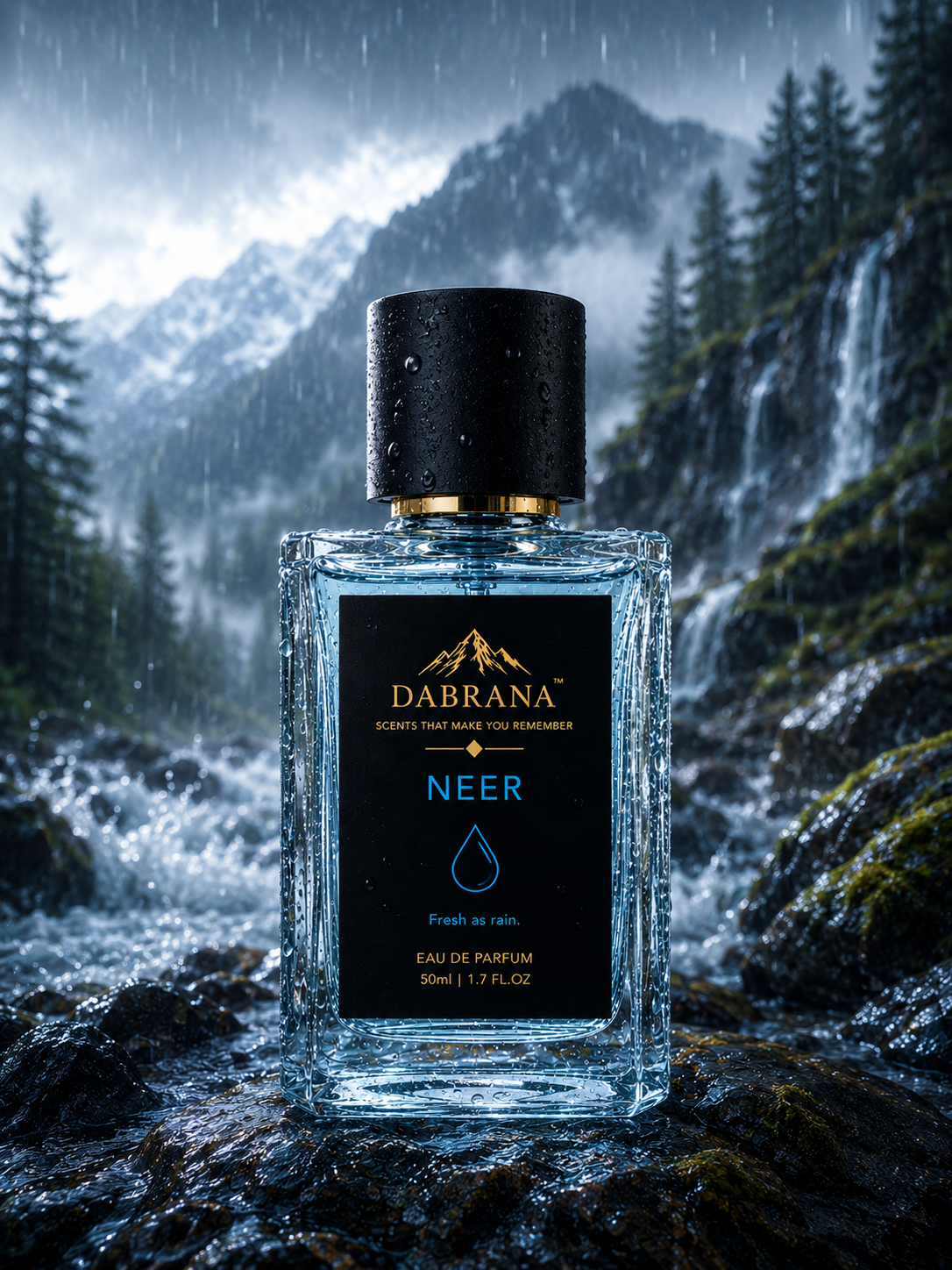
Bottle A — your hot-season scent. Neer is the strongest choice: green tangerine and neroli over a cedarwood-patchouli base, it stays clean through heat, humidity and monsoon rather than turning sweet. Lehar is the alternative — lighter and breezier, good if you find aquatics too cool.
Bottle B — your cool-season scent. Aaranya is the natural pick: bergamot and soft spice over a vanilla-and-ambroxan base, and that warm base blooms in cool air while reading well against festive-season incense and winter clothing. Vanraj is the deeper, genuinely woody option — cedarwood, sandalwood and amber — for evenings and weddings. If you prefer florals, Pushpika is the warmer one (brown sugar and patchouli under gardenia and jasmine) and Kusum the quieter, a bare jasmine-and-tuberose that sits close to the skin.
Adjusting for your city
- Delhi, Punjab, UP, the hills: the full system. Genuine winters make Bottle B essential.
- Mumbai, Chennai, Kochi, Kolkata: Bottle A does most of the year. Make Bottle B an occasion scent for evenings and weddings rather than a season.
- Bengaluru, Pune: mild year-round. Either works most days; switch by occasion instead of by month.
- Rajasthan, Gujarat: Bottle A must be genuinely light. Dry heat punishes anything sweet.
How to rotate
- Alternate days, not weeks. This is what prevents nose blindness.
- Switch dominance around October and March.
- Adjust the dose, not the bottle. Two sprays in summer, three in winter — cold air suppresses projection.
- Moisturise year-round. Summer sweat and winter dryness both shorten wear.
The cost
Two 50ml Eau de Parfum bottles at ₹1,111 each is ₹2,222 for a full year of coverage — less than a single mid-tier imported bottle. Each gives 8+ hours per application and roughly 500 sprays; alternated, the pair lasts eight to twelve months.
Free shipping and COD across India, and every order includes a free 8ml surprise tester — so a two-bottle order gets you a third scent to try. Use the scent profiler to pick your pair, or write to hello@dabrana.in with your city and we will suggest one.
FAQ
Can I manage with one bottle? Yes, if it is a dry-woody or fresh profile. You will just go nose-blind to it.
Which should I buy first? Whatever suits the current season. Add the second at the turn.
Should the two scents be similar? No — contrast is the point. Similar scents defeat the rotation.
Related: how many perfumes should you own and Indian weather month by month. Background: climate of India.