
Best Perfumes for Indian Weather: Summer, Monsoon & Winter Guide
India is a country of extremes. From scorching summer afternoons in Delhi to monsoon rains in Mumbai and cold winter mornings across the north, the climate changes dramatically through the year. Yet many people wear the same perfume every season and wonder why it feels different.
The reason is simple: a fragrance that performs beautifully in winter can feel heavy in summer, and one that feels refreshing in heat can seem thin in cold weather. Understanding how weather affects fragrance helps you choose the right scent for every season.

Why weather changes the way perfume smells
Perfume reacts to heat, humidity, wind and skin temperature. When temperatures rise, fragrance molecules evaporate faster and a scent projects harder. When temperatures drop, heavier base notes become more noticeable. The same bottle can feel like two different perfumes across seasons.
Best perfumes for Indian summer
What happens to perfume in summer
Indian summers routinely exceed 40°C. High temperatures make fragrances project more strongly and evaporate faster, so heavy or sweet compositions can feel overwhelming. Fresh fragrances tend to perform better because they read clean and airy on hot skin.
What notes work best in summer
Look for citrus, bergamot, green tangerine, lemon, neroli, marine notes and light musk. These create a cooling impression in hot weather.
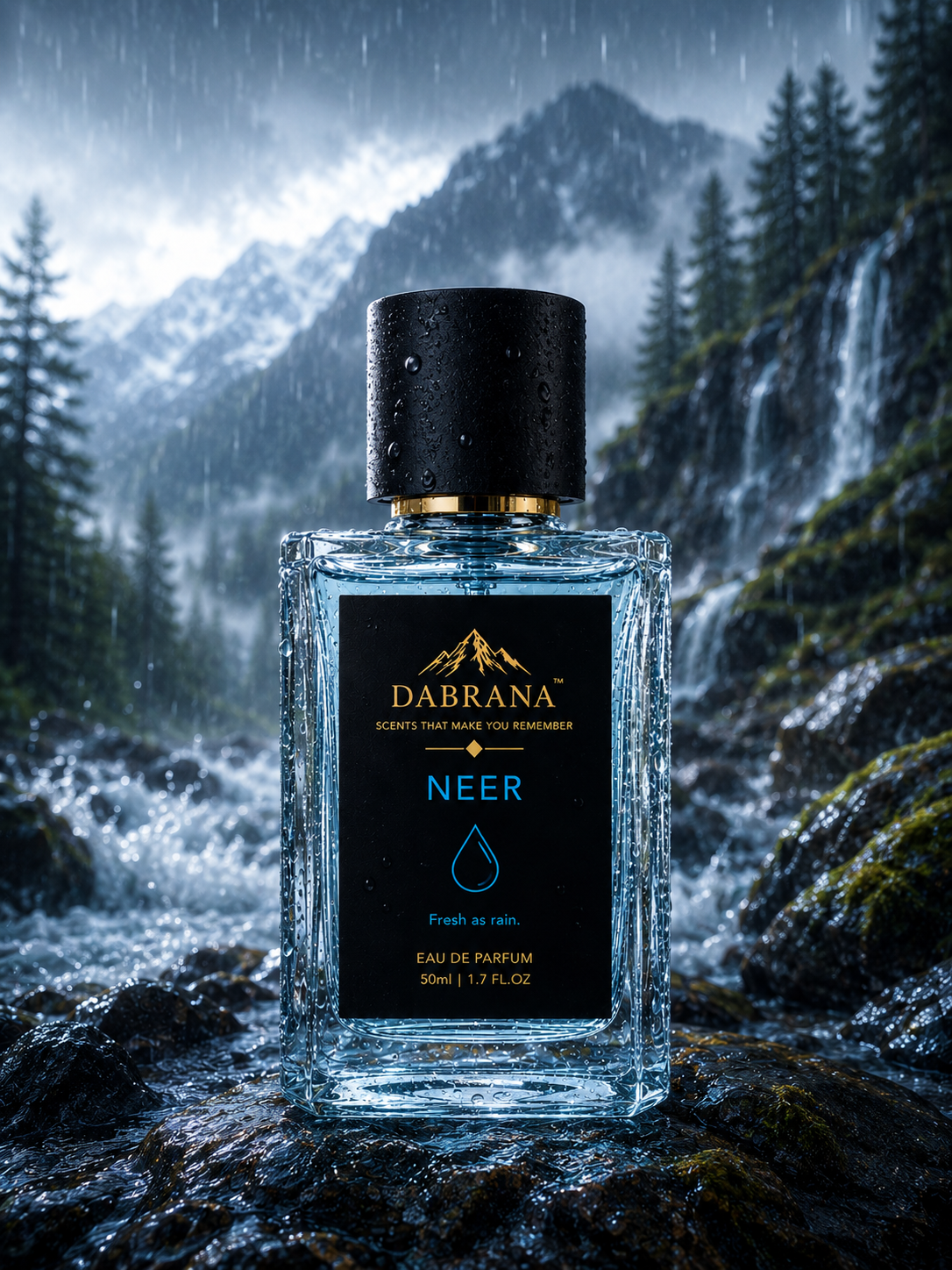
The summer pick: Neer
Neer was designed around freshness and clarity: bergamot, green tangerine and neroli on top, marine notes, jasmine and rosemary in the heart, cedarwood and patchouli underneath. It is the only one of the six with no sweetness anywhere in it, which is exactly why it is the safest choice in real heat — ideal for office wear, daily use, college and travel.
The other hot-weather option: Lehar
Lehar is the lightest of the six in character — apple, bergamot and lemon over watery notes, finishing on an ambergris and driftwood accord that reads as sea air rather than sugar. Good for hot evenings and coastal humidity.
A note on Aaranya in summer
Aaranya opens bright with Calabrian bergamot, but its base is vanilla and ambroxan — warm and sweet rather than woody or fresh. In peak heat that sweetness comes forward quickly and can feel heavier than expected. If you want to wear it in summer, keep it to early mornings and air-conditioned days, and go one spray lighter. For 40°C afternoons, Neer or Lehar is the better call.
Best perfumes for the Indian monsoon
What happens during monsoon
Humidity changes everything. Fresh scents can read brighter, earthy notes become more noticeable, and marine fragrances often perform exceptionally well. Monsoon is one of the most rewarding seasons for fragrance because scents feel richer and more atmospheric.
What notes work best during monsoon
Marine notes, watery accords, woods, ambergris, earthy notes and fresh citrus all complement rainy weather.
The monsoon pick: Lehar
Lehar captures the energy of an approaching storm: apple, bergamot, lemon and cinnamon on top; watery notes, orange blossom, cardamom and plum in the heart; ambergris, driftwood, musk and patchouli underneath. Fresh and magnetic in rain — good for evening outings, weekend trips and date nights.
Alternative: Neer
Neer's aquatic freshness pairs naturally with wet weather, and its dry cedarwood base keeps it from turning sour in humidity. More on that in how to wear perfume in monsoon.
Best perfumes for Indian winter
What happens during winter
Cool temperatures slow evaporation, which lets deeper materials show. Winter is the ideal season for amber, musk, patchouli, sandalwood, woods and warm spices — they feel comforting rather than heavy.
The winter pick: Vanraj
Vanraj is built around warmth and strength: black pepper, cardamom, cinnamon and bergamot on top; cedarwood, nutmeg, clove and lavender in the heart; amber, patchouli, sandalwood and musk in the base. It is the genuinely woody one in the range and carries the heaviest base, so it projects furthest — right for formal occasions, evening wear, weddings and winter gatherings.
Also excellent in winter: Aaranya
This is where Aaranya belongs. Sichuan pepper, lavender and star anise over vanilla and ambroxan is a combination cool air flatters — the warmth reads as depth rather than sweetness.
Floral choices across the seasons
Many florals struggle in hot climates because they can turn overwhelming. The key is choosing a balanced composition.
Pushpika — for daytime and occasions
Pear blossom accord, Italian mandarin and red berries; white gardenia, jasmine absolute and frangipani; patchouli and a brown sugar accord. Pushpika has real presence in a room, which makes it the occasion floral — brunches, weddings, special days.
Kusum — for when you want the quietest option
Jasmine, tuberose and rangoon creeper, with very little base beneath them. Kusum is an indolic white floral that sits close to the skin, which makes it the right pick for pujas, daytime, sensitive skin and anyone who finds most florals too much.
Which perfume works year-round?
Aaranya is the most adaptable of the six — fresh opening, aromatic heart, warm base — and it is the strongest single-bottle choice if you want one scent for most of the year. The one caveat is the sweetness in peak heat, noted above. If you would rather cover the year properly with two bottles, one fresh and one warm, see our two-perfume rotation guide.
Quick seasonal guide
- Summer: Neer, then Lehar.
- Monsoon: Lehar, then Neer.
- Winter: Vanraj, then Aaranya.
- Daytime floral: Kusum.
- Occasion floral: Pushpika.
All six are 50ml Eau de Parfum at ₹1,111, built for 8+ hours of wear. What changes between them is weight and presence, not hours.
How to make perfume last in Indian weather
- Summer: apply to moisturised skin, spray behind the ears and on the neck, and carry a small atomiser if you are out all day.
- Monsoon: store bottles away from humidity and keep them out of the bathroom.
- Winter: apply to pulse points, and lean on the warmer, woodier bottle in your rotation.
Frequently Asked Questions
Which perfume is best for Indian summer?
A fresh, unsweetened composition. Neer is the safest choice because it has no sweetness at all and rests on a dry cedarwood base; Lehar is the next option for hot evenings.
Should I change perfume by season?
You do not have to, but most people are happier with two bottles — one fresh for heat and humidity, one warmer for winter and evenings.
Do perfumes last less in Indian heat?
All six Dabrana scents are built for 8+ hours, but heat makes a fragrance project harder early on, so it can feel like it fades sooner. Applying to moisturised skin helps.
Further reading: how humidity (Wikipedia) works and the basics of perfume.