
Is Perfume Safe for Skin?
For most people, perfume applied to skin in normal amounts is safe. Fragrance is one of the more common causes of cosmetic contact reactions, but common here means a small minority, and the reaction is usually mild and local. Here is a practical, non-alarmist account.
This is general information, not medical advice. If you have a diagnosed fragrance allergy, eczema or a skin condition under treatment, follow your dermatologist rather than a blog.
What can actually go wrong
Irritation
The commonest issue, and not an allergy. Alcohol is drying, and on already-dry or freshly shaved skin it can sting and redden for a short while. It settles on its own. Spraying on a different spot solves it.
Allergic contact dermatitis
A genuine immune response to a specific fragrance material, showing as itching, redness or small bumps that persist for a day or more. This is why the EU requires certain fragrance allergens to be named on labels — a short list of materials, including things like linalool and limonene, that account for most documented cases. If you react, the useful information is which material, not fragrance in general.
Photosensitivity
The one worth knowing about in India. Some citrus-derived materials, historically bergamot oil, can react with strong sunlight and leave a darker patch. Modern perfumery uses treated bergamot that removes the responsible compound, so this is now rare — but it is a good reason not to spray perfume on skin that will be in direct afternoon sun for hours.
Who should be more careful
- Sensitive or eczema-prone skin. Spray clothing at a distance, or choose lower-alcohol formats.
- Very dry skin. Moisturise first; hydrated skin both tolerates and holds perfume better.
- Children. Thinner skin and a larger surface-to-weight ratio. Use sparingly if at all.
- During pregnancy. Mostly a question of nausea rather than safety. Covered in wearing perfume during pregnancy.
If your skin is reactive, there is a fuller guide in perfumes for sensitive skin.
How to patch test properly
- Spray once on the inside of your forearm, not the wrist.
- Leave it alone for 24 hours. Do not wash the spot, and do not judge it at ten minutes.
- Look for redness, itching or bumps that are still there the next day.
- If nothing, repeat once more on a second day before wearing it fully.
A brief sting that vanishes in five minutes is irritation from alcohol, not an allergy. Something still itching tomorrow is worth paying attention to.
Sensible habits
Spray from 15 to 20 cm rather than point-blank. Use pulse points — neck, chest, inner elbows — and skip broken, shaved or sunburnt skin. Do not rub the wrists together; it crushes the top notes and adds friction to skin that has just had alcohol on it. And keep the dose modest: three sprays of an Eau de Parfum is plenty, as set out in how many sprays.
If perfume regularly gives you a headache rather than a rash, that is a different mechanism entirely — see why some perfumes give headaches.
FAQ
Can perfume darken the skin?
Only through the photosensitivity route described above, and it is uncommon with modern materials. Avoiding perfume on skin in direct sun removes the risk.
Is natural perfume safer than synthetic?
No. Natural does not mean hypoallergenic — many of the best-documented fragrance allergens are natural essential-oil constituents. Synthetics are often better characterised and more consistent. See natural vs synthetic ingredients.
Where should I not spray perfume?
Broken skin, freshly shaved skin, near the eyes, and anywhere that will be in strong direct sunlight for hours.
Does Eau de Parfum irritate more than Eau de Toilette?
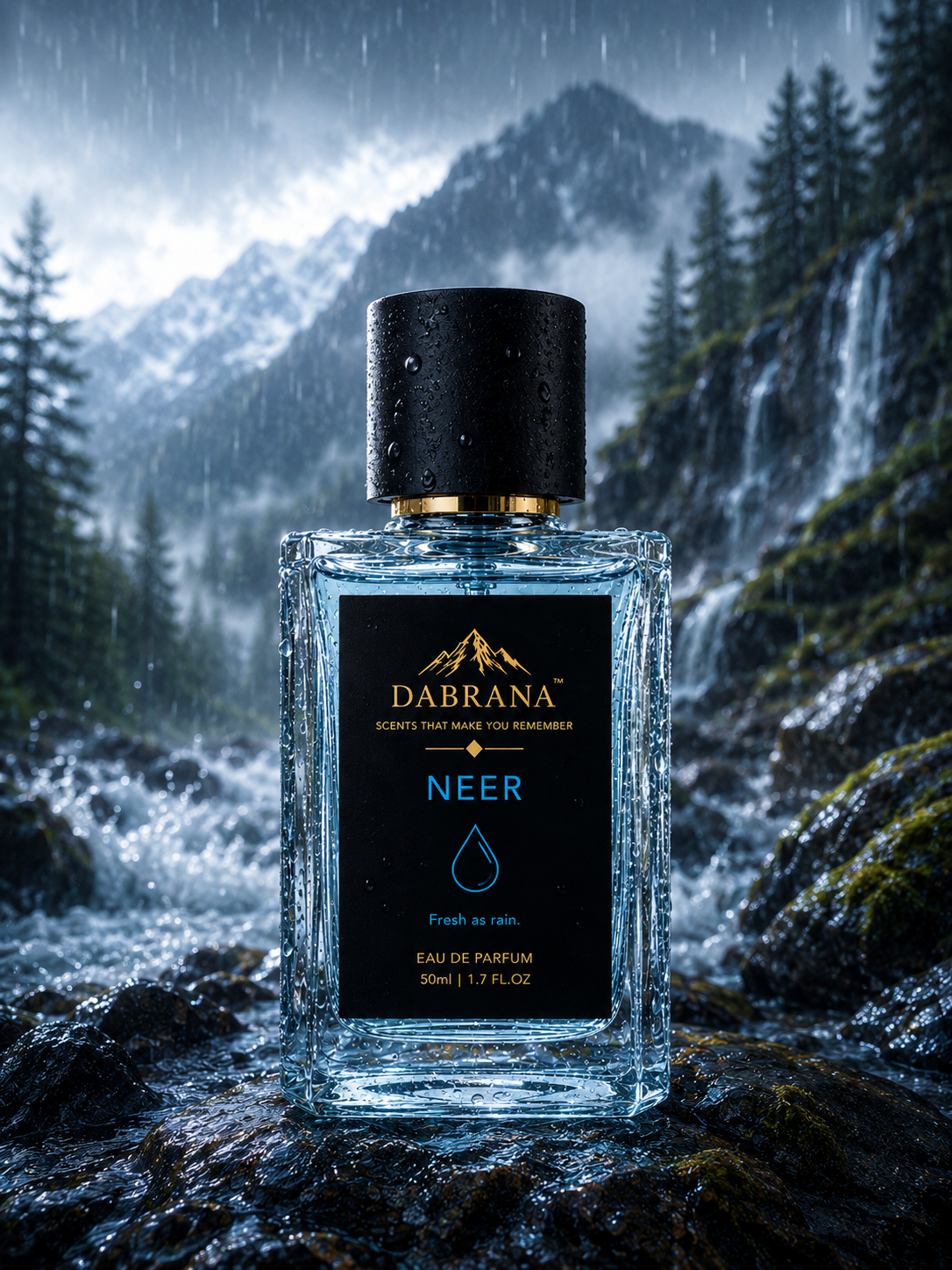
Not reliably. EDP has more concentrate but less alcohol by proportion. What matters more is the specific materials and how much you apply. All six of our fragrances — including the softer Kusum and the fresh Neer — are Eau de Parfum; specifications are on the brand facts page.
Reference reading on fragrance allergens is available on Wikipedia.